

Quick summary
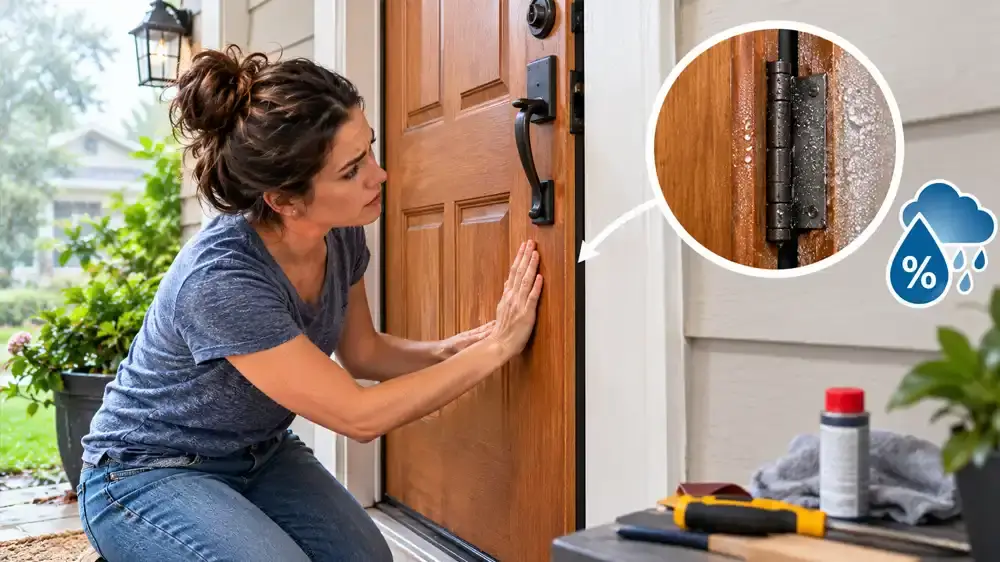
Doors stick for a few simple reasons, and humidity tops the list. Find the rub point, try the easy fixes first, and learn when a sticking door points to a bigger problem.
- Difficulty
- Beginner
- Time
- 15 minutes to 2 hours
- Material cost
- $0 to $40 for screws, sandpaper and touch-up paint
- Read time
- 7 min
Costs assume basic hand tools. A new door, a new frame or foundation work costs far more and needs an inspection.
The door that closed fine in April now drags on the frame in July. You shove it. It bangs. You slam it just to latch it. Sound familiar?
A sticking door is annoying, and it is usually easy to fix. The trick is finding out why it sticks. Start with the cheap, quick answers and work up.
Humidity is the usual suspect
Wood takes on moisture from the air and swells. Then it shrinks again in dry months. In southern Delaware, summers are humid and the coast adds even more moisture. Doors that were painted only on the face are the worst. Bare edges and the top and bottom of the door soak up water.
If your door sticks in summer and loosens in winter, you are probably dealing with humidity. Bathrooms and basements are prime spots. Our guide to mold on a bathroom ceiling shows how to manage bathroom moisture, which often fixes doors there too.
Find the rub point
Close the door and look at the gaps. Is the gap even all the way around? Slide a piece of paper into the space. If it sticks at one spot, you have found where it rubs. Look for shiny or scuffed paint on the door edge or frame. Another trick is to rub chalk on the door edge, close it and see where it leaves marks.
Try the easiest fix first: tighten the hinges
Loose hinges let the door sag. The top hinge screws loosen most often. Open the door and tighten every screw. If a screw spins freely, the hole is stripped. Fill it with a wooden golf tee or toothpicks and wood glue, trim it flush, and drive the screw back in. Or replace one hinge screw with a longer 3 inch screw that bites into the framing behind the jamb. It pulls the door back into place.
Sand or plane the sticking edge
If the hinges are tight and the door still rubs, remove a little wood. For a small rub, sand the spot with medium sandpaper on a block. For more, use a hand plane in light passes. Take off a little at a time. Remove less than you think you need, since the door will shrink back in the dry season.
Then seal the bare wood. Prime and paint or varnish every edge, including the top and bottom. This slows moisture getting back in. It is the step people skip, and the reason doors stick again.
When a sticking door is a warning sign
Most sticking is harmless. But sometimes a door sticks because the house has moved. Look for these clues:
- Diagonal cracks above door frames or in corners of walls
- Doors and windows that stick in several rooms at once
- Floors that slope or feel uneven
- Gaps between the walls and the ceiling or floor
These can point to settling, a leaking foundation or a wet basement. If you have more than one of these signs, check the foundation. See our guides to a basement leaking after rain and sump pump problems. A dry foundation protects every door in the house. And if you are thinking about finishing the space below, a finished basement plan starts with that same moisture check.
Symptoms and warning signs
- Door rubs or drags on the frame
- Door sticks only in humid weather
- Door will not latch or needs a slam
- Visible scuff marks on the edge or frame
- Uneven gaps around the door
- Door that swings open or closed on its own
- Squeaking hinges and loose screws
Common causes
- Wood swelling from humidity
- Loose or sagging hinges
- Paint buildup on the edge or frame
- Unsealed edges that absorb moisture
- A frame that is out of square
- House settling or foundation movement
- Latch or strike plate that is misaligned
How to diagnose the problem
- Close the door and check the gaps all around
- Use a slip of paper to feel where it sticks
- Rub chalk on the edge and close the door to mark the rub spot
- Test each hinge screw for looseness
- Check whether the door sticks more in summer than in winter
- Look at the frame for cracks and the walls for diagonal cracks
- Check whether other doors and windows stick too
- Use a level to see if the frame is plumb
Tools and materials
Tools
- Screwdriver or drill
- Sandpaper and a sanding block
- Hand plane (optional)
- Chalk or pencil
- Wood glue and toothpicks
- Paintbrush
- Utility knife
- Level
Materials
- Longer 3 inch hinge screws
- Wood filler or golf tees
- Primer and paint or varnish
- Door shims
- Candle wax or paraffin for the latch
Safety first
- Wear goggles and a dust mask when sanding or planing.
- Get help removing a heavy door from its hinges.
- Check for lead paint before sanding doors in homes built before 1978.
- Never remove too much wood at once.
- Keep fingers clear of the hinge side when the door is closed.
Step-by-step repair
- Find the rub point with a slip of paper or chalk.
- Tighten every hinge screw. Replace stripped ones with longer screws.
- Check the door again. If it still rubs, sand the spot with medium sandpaper.
- If needed, plane the edge in light passes. Take off a little at a time.
- Check the fit after each pass.
- Sand smooth and wipe off dust.
- Seal bare wood with primer and paint or varnish. Do all four edges.
- Rub wax on the latch if it is stiff, and adjust the strike plate if it does not line up.
- Run a dehumidifier or fan to control humidity in the room.
- Recheck the door in the humid season.
Common mistakes to avoid
- Planing the door in peak humidity and removing too much
- Leaving bare wood unsealed
- Ignoring loose hinges
- Forcing a door that is binding
- Painting over the problem without sanding
- Ignoring signs of foundation movement
Troubleshooting
- Door sticks again after a few weeks: edges are unsealed or humidity is high.
- Hinge screws will not hold: fill the hole or use longer screws into the framing.
- Door rubs at the top corner on the latch side: hinges are loose or the frame has shifted.
- Door will not latch: align the strike plate or adjust the latch.
- Several doors stick: check for settling or a moisture problem.
Repair or replace?
Nearly every sticking door is a repair. Replace the door if it is warped, cracked or delaminated beyond fixing. Replace or repair the frame if it is rotted. If multiple doors stick and the walls show cracks, check the structure before spending money on new doors.
When to call a professional
Call a pro if the frame is out of square, a door is warped, doors stick all over the house, or you see cracks in walls, floors or the foundation. A damp basement is another reason to bring someone in. If your house needs more than a door fix, we can look at the whole space. See our basement finishing and bathroom remodeling services.
Delaware considerations
Southern Delaware's muggy summers swell doors every year. Run a dehumidifier or air conditioning, and keep bathroom fans working. Exterior doors on coastal homes also take salt and sun, so reseal them every year or two. If you leave a seasonal home closed up, humidity builds. A small dehumidifier or a cracked window can help. Some doors stick after heavy storms, which can be a sign that water is getting into the house.
Frequently asked questions
Why does my door stick in summer but not winter?
Wood swells when it takes in humidity and shrinks when the air is dry. The fix is to adjust the hinges, sand the rub point and seal the edges.
Should I plane or sand a sticking door?
Try tightening hinges first. Then sand small rubs, and plane only if more wood must come off. Take off a little at a time.
Why does my door stick at the top corner?
The top hinge may be loose and the door is sagging. Tighten the screws or use longer screws.
Can a sticking door mean foundation problems?
Sometimes. If several doors stick and you see diagonal wall cracks or uneven floors, have the foundation checked.
Will a dehumidifier fix a sticking door?
It can help a lot when humidity is the cause, especially in bathrooms and basements.
Do I need to paint the edges of a door?
Yes. Sealing all edges, including the top and bottom, helps prevent the door from absorbing moisture.