

Quick summary
Black or green spots on a bathroom ceiling mean moisture is sitting there. Clean small patches safely, fix the airflow problem, and know when to call a pro.
- Difficulty
- Beginner
- Time
- 1 to 3 hours to clean, plus a day to dry and paint
- Material cost
- $15 to $60 for cleaning supplies and mold-resistant primer or paint
- Read time
- 8 min
Supply costs only. A new exhaust fan, ducting or professional remediation costs more. Prices are rough retail ranges.
Look up the next time you shower. If you see black freckles, green fuzz or gray streaks on the ceiling, you are looking at mold. It is common. It is also a sign that your bathroom is not drying out.
Cleaning it is easy. Keeping it away is the real job. This guide covers both, using the same advice the EPA gives homeowners.
Why bathroom ceilings grow mold
Hot showers put a lot of moisture into the air. It rises and settles on the coolest surface, usually the ceiling. If the air does not leave the room, the ceiling stays damp. Mold needs very little. A damp surface, a bit of dust and soap residue, and a day or two is enough.
That is why the answer is almost never a stronger cleaner. It is better airflow. The same moisture also swells wood, so a bathroom door that sticks every summer is part of the same story. See why a door sticks for that fix.
Is it safe to clean yourself?
The EPA says that if the moldy area is less than about 10 square feet, roughly a 3 foot by 3 foot patch, most homeowners can handle it. See the agency’s guide, Mold Cleanup in Your Home. Larger areas, or heavy water damage, call for more careful treatment. Be honest when you measure.
There are other times to stop. If the ceiling is soft, sagging or stained from a leak, the problem is bigger than surface mold. Check our guide on a shower leaking through the ceiling. If someone in the home has asthma, allergies or a weak immune system, think twice before cleaning it yourself.
You probably do not need bleach
The EPA says bleach is usually not needed. Detergent and water, with firm scrubbing, removes mold from hard surfaces. Never mix bleach with ammonia or other cleaners. The fumes are dangerous. On painted drywall, go light with water. Too much soaks the board.
Fix the ventilation, or it comes back
This is the part most people skip. Check your exhaust fan.
- Does it move air? Hold a square of toilet paper to the grille. It should stick.
- Is it sized right? A common guideline is about 1 CFM per square foot of bathroom, with a minimum around 50 CFM. Check the number printed on the fan housing.
- Does it vent outside? A fan that dumps into the attic just moves the problem upstairs.
- Do you run it long enough? Run it during the shower and for about 20 minutes after.
An old, noisy, weak fan is often the real culprit. A timer switch or humidity-sensing fan makes it automatic. In a bathroom with no fan or a bad duct, the fix is part of a bigger plan. When we do a bathroom remodel, we size the fan to the room, route the duct outside and add moisture-resistant finishes. That solves the cause, not just the stain.
Paint the ceiling right
After you clean and let the ceiling dry fully, prime stains with a stain-blocking primer. Then use a mildew-resistant bathroom paint. Paint does not stop mold on its own. It helps a dry ceiling stay clean. Keep your caulk fresh too. We explain how in our guide to caulking a bathtub.
Symptoms and warning signs
- Black, green or gray spots on the ceiling
- Musty smell, especially after showers
- Peeling or bubbling ceiling paint
- Mold growth around the fan or light fixture
- Dark streaks in corners or along caulk lines
- Condensation dripping from the ceiling
Common causes
- Weak, noisy or undersized exhaust fan
- Fan that vents into the attic or not at all
- Not running the fan long enough after showers
- No fan, or a fan that is never used
- Poor insulation causing cold spots on the ceiling
- Roof or plumbing leak above the bathroom
- Soap residue and dust that feed mold
How to diagnose the problem
- Measure the moldy area with a tape measure. Under about 10 square feet is the DIY range.
- Check the ceiling for soft spots, stains or sagging that suggest a leak
- Test the fan with a square of toilet paper
- Read the CFM rating on the fan housing and compare it with your bathroom size
- Check in the attic that the fan duct goes outside
- Look at the ceiling after a shower. Is it covered in condensation?
- Check for leaks from the room above or from the roof
Tools and materials
Tools
- Stiff brush or sponge
- Spray bottle
- Bucket
- Step ladder
- Goggles with no ventilation holes
- N95 respirator
- Rubber gloves
- Paint roller or brush
Materials
- Liquid dish soap or laundry detergent
- Clean rags and a towel
- Stain-blocking primer
- Mildew-resistant bathroom paint
- Drop cloth and painter's tape
- Replacement exhaust fan, if needed
Safety first
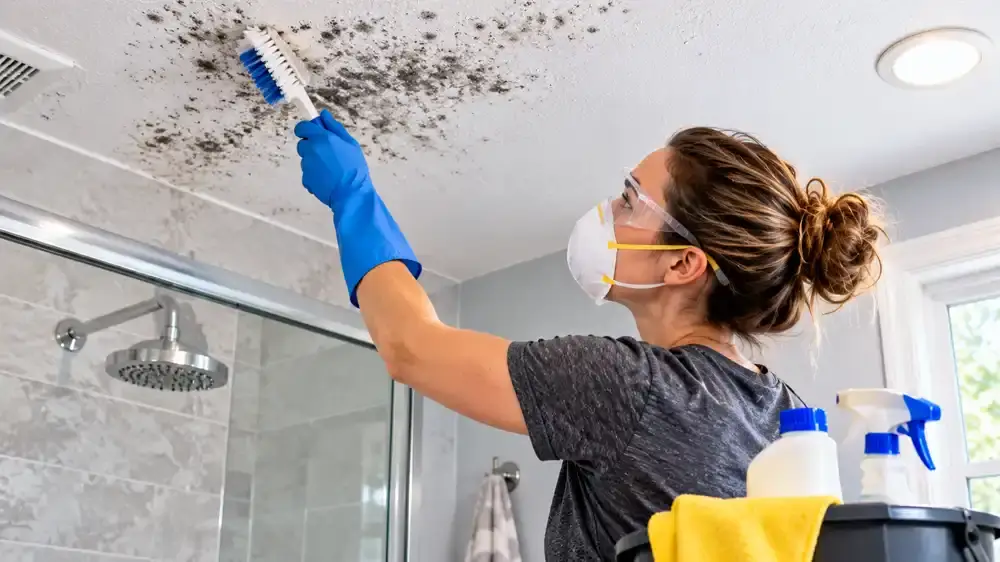
- Wear an N95 respirator, goggles and gloves. Cleaning can release spores.
- Never mix bleach with ammonia or other cleaners.
- Ventilate the room and keep other rooms closed off while you clean.
- Turn off power to the bathroom fan and light before touching them.
- Stop and reassess if the area is bigger than about 10 square feet or the ceiling is soft.
Step-by-step repair
- Run the fan and open a window. Close the door to the rest of the house.
- Cover the floor and tub with a drop cloth.
- Mix dish soap or detergent with water in a spray bottle.
- Lightly mist the moldy area. Do not soak the drywall.
- Scrub with a stiff brush or sponge. Rinse the sponge often.
- Wipe the area with a clean damp cloth and dry it with a towel.
- Run a fan or dehumidifier until the ceiling is fully dry.
- Check the fan. Clean the grille or replace the fan if it is weak.
- Prime stained spots with a stain-blocking primer, then paint with a mildew-resistant paint.
- Run the fan during showers and for about 20 minutes afterward.
Common mistakes to avoid
- Spraying heavy bleach and leaving the cause alone
- Soaking the drywall
- Painting over mold without cleaning it
- Ignoring a weak or disconnected fan
- Using a fan that vents into the attic
- Mixing cleaners
Troubleshooting
- Mold returns in weeks: moisture is still high. Check fan power and duct, and run it longer.
- Stains remain after cleaning: use a stain-blocking primer before painting.
- Ceiling feels soft: there is a leak or long-term water damage. Stop and call a pro.
- Fan runs but ceiling is still damp: it may be undersized, clogged or ducted poorly.
- Mold in several rooms: you may have a whole-house humidity problem.
Repair or replace?
Cleaning and painting is the right fix for light surface mold on a sound ceiling. If the fan is weak, noisy or vents into the attic, replace it. If drywall is soft, stained from leaks or covered in mold beyond about 10 square feet, it should be removed and replaced, not cleaned.
When to call a professional
Call a pro if the mold covers more than about 10 square feet, the ceiling is soft or sagging, there is a leak above it, or you cannot find the moisture source. Also call if anyone in the home has breathing problems. Our bathroom remodeling crew can upgrade the ventilation, replace damaged drywall and finish the room with moisture-resistant materials.
Delaware considerations
Southern Delaware summers are muggy, and the coast adds salty, damp air. Bathrooms struggle to dry out. Run the fan longer in summer, and keep a hygrometer in the room. Aim for indoor humidity below about 50 percent. In older homes near the beaches, duct runs may be long or poorly insulated, which can cause condensation inside the duct. Have the vent checked if your ceiling stays wet.
Frequently asked questions
Is mold on a bathroom ceiling dangerous?
It can irritate the eyes, nose and throat, and may worsen asthma or allergies. Clean small areas promptly and fix the moisture source.
How do I get rid of mold on a bathroom ceiling?
Scrub small areas with detergent and water, wearing a mask, gloves and goggles. Dry the ceiling fully, then fix ventilation. The EPA says bleach is usually not needed.
Why does mold keep coming back on my bathroom ceiling?
Because the moisture source is still there. A weak fan, a fan that does not vent outside, or a short run time are the most common reasons.
What size exhaust fan do I need?
A common guideline is about 1 CFM per square foot of bathroom, with a minimum of around 50 CFM. Check the manufacturer's recommendations for your room.
When should I call a professional?
If the mold covers more than about 10 square feet, the ceiling is soft, or it follows a leak or flood. Also call if you cannot find the cause.
Will mold-resistant paint fix it?
No. It helps on a clean, dry ceiling, but it does not replace ventilation or cleaning.