

Quick summary
Match the fix to the hole. Learn how to patch nail holes, doorknob dents and large gaps in drywall, and how to sand, prime and paint so the repair vanishes.
- Difficulty
- Beginner
- Time
- 1 hour of work spread over 1 to 2 days for drying
- Material cost
- $10 to $35 for patch materials
- Read time
- 7 min
Costs assume a patch kit or basic supplies. Water-damaged drywall, large areas or textured walls need more material and may call for a pro.
Doorknobs hit walls. Furniture slips. A picture falls and takes a chunk with it. Drywall is soft, and holes are part of owning a home.
The good news is that patching drywall is one of the most satisfying repairs you can learn. The secret is matching the method to the size of the hole, then being patient with the finish. Here is how.
Size up the hole first
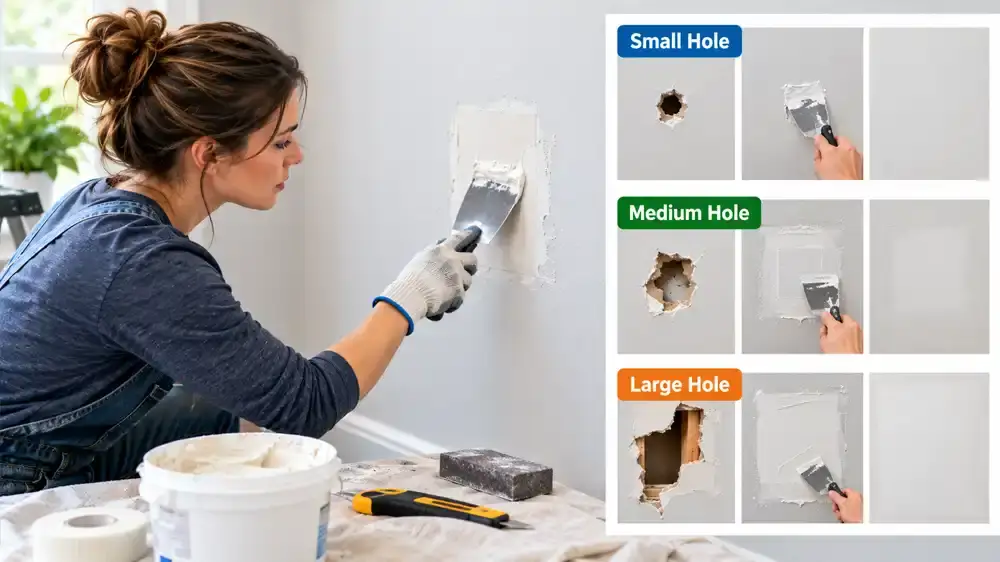
There are three sizes, and each has its own fix.
- Small, up to about 1/2 inch. Nail holes, screw holes and small dents. Fill with lightweight spackle.
- Medium, about 1/2 inch to 6 inches. Doorknob holes and anchor holes. Use a self-adhesive mesh patch or a metal patch, then joint compound.
- Large, over 6 inches. Cut the damage out and install a new piece of drywall with backing.
Before you start, tap around the hole. If the drywall near it is soft, crumbly or stained, it may have water damage. That is a different job. Fix the leak first, and cut out any wet or moldy board.
A quick word on old paint and dust
If your home was built before 1978, the paint may contain lead. Sanding creates fine dust. Test the paint with a lead test kit, and use wet sanding and a mask rated for it if the result is positive. When in doubt, ask a pro.
Fixing small holes and dents
For nail holes and small dings, scrape away loose bits. Press lightweight spackle into the hole with a putty knife. Scrape the surface flat. Let it dry. Sand lightly with fine sandpaper, wipe the dust off, then prime and paint. For deeper dents, apply a second thin coat after the first dries.
Fixing medium holes
For a doorknob hole, use a self-adhesive mesh patch, or a metal-backed patch. Clean the area and stick the patch over the hole. Spread joint compound over it with a wide knife, pulling the edges thin. Let it dry. Add a second coat that extends a few inches past the first, and a third if needed. Wider, thinner coats blend better than one thick coat. Sand smooth between coats.
Fixing large holes
For big holes, cut a clean rectangle around the damage. Screw wood strips or drywall clips behind the edges to hold the new piece. Cut a matching drywall piece. Screw it in. Cover the seams with paper or mesh tape and joint compound. Apply two or three thin coats, feathering each wider than the last. Sand, prime and paint.
Make the repair disappear
Most visible patches fail at the end, not the beginning. Prime the patch before you paint. Primer seals the compound so the paint does not look dull in that spot. If the wall is textured, match the texture with a spray or a sponge before priming. Paint the whole wall corner to corner for the best match.
If you see lots of damage in a room, it may be a sign it is time for more. Many homeowners start with a patch and end up refreshing a whole space. And if a wall is simply in your way, read how to tell if a wall is load bearing before you plan any demolition. Our bathroom remodeling and basement finishing projects both rely on clean, well-finished drywall, which is one of the details that makes a space look professional.
Symptoms and warning signs
- Nail or screw holes and small dents
- Doorknob holes in walls
- Cracks along seams or corners
- Fist-sized holes from impacts
- Soft, stained or crumbly drywall
- Nail pops or lines showing through paint
Common causes
- Impacts from doors, furniture and everyday use
- Picture hangers and anchors removed
- House settling and humidity changes causing cracks
- Water damage making drywall soft
- Previous repairs done poorly
- Removed wall fixtures or outlets
How to diagnose the problem
- Press around the hole to check for soft or crumbly board
- Look for stains that point to a leak
- Measure the hole to choose the right patch
- Check behind the wall for wires or pipes before cutting
- Tap the wall to find studs nearby
- Check for lead paint if the house was built before 1978
Tools and materials
Tools
- Putty knife and 6 inch and 10 inch drywall knives
- Sanding sponge or fine sandpaper
- Utility knife
- Drywall saw
- Drill and screws
- Stud finder
- Dust mask and goggles
- Paint roller or brush
Materials
- Lightweight spackle
- Self-adhesive mesh patch or metal patch
- Joint compound
- Paper or mesh drywall tape
- Drywall scrap or patch piece
- Wood strips or drywall clips
- Primer and matching paint
Safety first
- Wear a dust mask and goggles when sanding.
- Check for wires and pipes before cutting into a wall.
- Test for lead in paint on older homes before sanding.
- Turn off the breaker if you are near an outlet or switch.
- Ventilate the room and clean up dust with a damp cloth or HEPA vacuum.
Step-by-step repair
- Clear loose paper and debris from the hole.
- For small holes, fill with spackle, scrape flat, dry, sand and prime.
- For medium holes, press a mesh or metal patch over the hole.
- Spread joint compound over the patch with a wide knife and feather the edges.
- Let it dry fully. Sand lightly and apply a second, wider coat.
- Repeat a third coat if needed. Sand smooth.
- For large holes, cut a clean square, add backing strips, and screw in a new piece.
- Tape the seams, then apply thin coats of compound, feathering each wider.
- Sand, wipe the dust off, and prime the patch.
- Paint the wall from corner to corner to blend the repair.
Common mistakes to avoid
- Using one thick coat instead of several thin ones
- Skipping primer
- Sanding too hard and tearing the paper
- Patching over water damage or mold
- Painting only the patch
- Cutting without checking for wires or pipes
Troubleshooting
- Patch shows through paint: it was not primed or the edges were not feathered wide enough.
- Cracks return: use mesh tape, thinner coats and let each coat dry fully.
- Texture does not match: use a texture spray or a sponge to blend it.
- Bumps or ridges after sanding: apply a thin skim coat and sand again.
- Patch sinks or bubbles: the compound was too thick or dried too fast.
Repair or replace?
Patch small and medium holes. Replace a section of drywall if it is large, soft, moldy or water stained. If a whole wall or ceiling is badly damaged, replacing sheets is faster and gives a better result than many layers of patching.
When to call a professional
Call a pro for water-damaged drywall, large ceiling repairs, textured or high ceilings, or if you want a perfect finish on a wall that gets strong light. Pros also help when you are repairing many walls in a remodel. We handle drywall as part of every bathroom remodel and finished basement.
Delaware considerations
Humidity swings in Delaware make drywall expand and contract, so seams crack in older homes. Run a dehumidifier in damp spaces and let patches dry fully between coats. A coat that feels dry in a humid week may still be wet inside. In basements, make sure the walls are dry and free of moisture before any drywall work. Older coastal homes may also have plaster, which needs a different repair.
Frequently asked questions
What is the easiest way to patch a hole in drywall?
For holes up to a few inches, use a self-adhesive mesh patch and joint compound. For nail holes, spackle is enough.
How long does drywall patch take to dry?
Spackle for small holes can dry in an hour or two. Joint compound coats often need several hours to a day each, longer in humid weather.
Do I have to prime a drywall patch?
Yes. Primer seals the patch so paint looks even and the repair does not show.
How do I fix a hole larger than my hand?
Cut a clean rectangle around the damage, add backing, install a matching drywall piece, tape the seams and apply thin coats of compound.
Why does my patch still show after painting?
Common causes are no primer, thick edges, or not painting the whole wall. Feather the compound wide and paint corner to corner.
Is it safe to sand old paint?
Not always. Homes built before 1978 may have lead paint. Test it first and use safe methods if the test is positive.