

Quick summary
A stain under your bathroom means water is escaping. Learn how to find the source, protect your home right away, and decide between a repair and a rebuild.
- Difficulty
- Advanced
- Time
- 1 to 3 hours to find the source, longer to repair
- Material cost
- $10 to $60 for supplies for minor sealing. Pan and plumbing repairs are quoted by a pro.
- Read time
- 8 min
The supplies listed are only for finding and sealing minor leaks. A leaking shower pan, drain or supply line usually means opening the floor or wall, and costs depend on what is found.
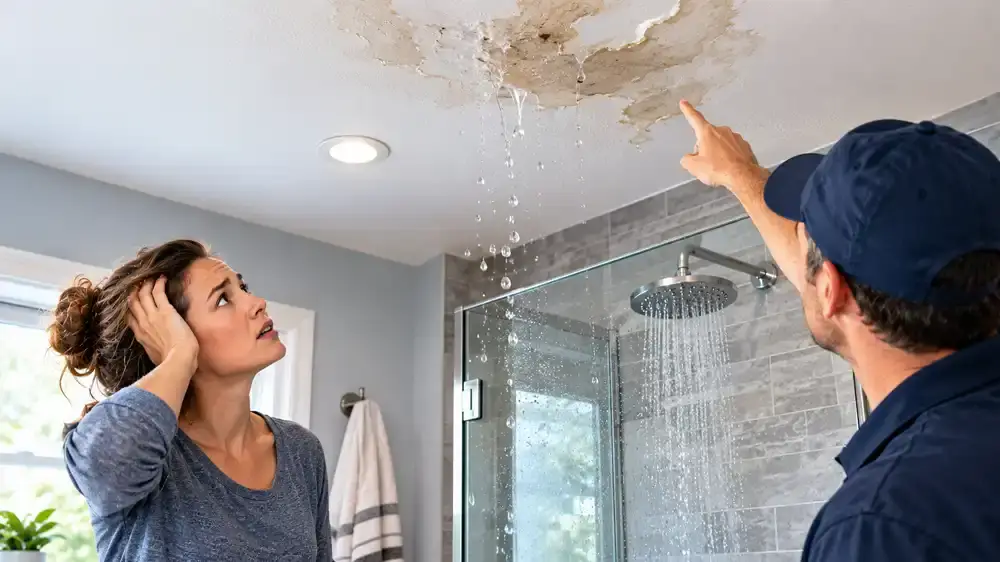
You look up and see a brown stain on the ceiling. It sits right under the upstairs bathroom. Or you notice drips in the basement, below the shower. Your first thought is probably the same as everyone’s. Where is that coming from?
A shower leak is a puzzle. The water you see is rarely where it started. This guide shows how to track it down, what to do first, and how to decide between a patch and a rebuild.
Do these three things first
- Stop using the shower. Every use sends more water into the damage.
- Check the ceiling for bulges. A bulge holds water. Place a bucket under it and, carefully, poke a small hole at the lowest point to let it drain in a controlled way. This can prevent a bigger collapse.
- Take photos. If this may become an insurance claim, document the stain, the date and the size.
Then keep reading. The next step is finding the source.
The usual suspects
Water usually escapes in one of a few places. Start with the easiest to check and work toward the hardest.
Failed caulk or grout
Cracked caulk at the tub, shower base or corners lets water behind the wall. This is the cheapest cause to fix. See our guide on how to caulk a bathtub.
Cracked tile or loose grout
Water passes through failed grout lines and cracked tile. If the tile sounds hollow when you tap it, water may be behind it.
The shower pan or liner
Tile showers sit on a waterproof pan. Over time, the liner can crack, tear or fail at the corners. This is a hidden leak. You may not see anything until the ceiling below stains.
The drain connection
The drain pipe seals to the pan with a gasket or clamp ring. If that seal fails, water leaks around the drain every time you shower.
Supply lines and valves
Pipes behind the wall can leak at the valve or fittings. In this case, the stain may appear even when no one is showering.
How to narrow it down
Use a process of elimination. First, run the shower for 10 minutes and check the ceiling. If it leaks only with the shower on, the cause is the shower area. If it drips even when it is off, think supply pipes. Then test the drain. Plug it, fill the base with an inch or two of water, and wait an hour. If the ceiling stain grows, the pan or drain is leaking. Do this with a helper checking the ceiling below.
If you cannot find the source in an hour or two, stop. Guessing wastes time and lets damage spread.
Moisture damage does not wait
Within 24 to 48 hours of getting wet, drywall and wood can grow mold. Dry the area quickly with fans and a dehumidifier. If you see mold on the ceiling or walls, our guide to mold on a bathroom ceiling covers cleanup and prevention. And remember, a stain is not just cosmetic. It can mean rotting joists and subfloor above it.
Patch or rebuild?
If the cause is old caulk, you are in luck. If the shower pan or drain is the culprit, the real fix means opening the shower. Many homeowners decide this is the moment to rebuild the room. A full bathroom remodel lets you replace the pan, waterproof the walls properly and fix any rot in one go. It is the same cost of opening the floor, with a much better outcome. If the leak is above a finished basement, check our guide to a finished basement so you can plan repairs and ceilings together.
Symptoms and warning signs
- Brown or yellow stain on the ceiling under the bathroom
- Drips or a bulge in the ceiling after showering
- Peeling paint or bubbling drywall below the shower
- Musty smell near the bathroom or below it
- Soft or spongy floor around the shower
- Water pooling near the tub or on the floor outside the shower
- Higher water bills with no other explanation
Common causes
- Worn caulk or grout around the tub or shower
- Cracked tile or failed waterproofing behind the tile
- Cracked or torn shower pan or liner
- Leaking drain gasket or clamp ring
- Leaking supply pipes or valve
- Overflow drain connection failure on a tub
- A loose or damaged shower door or glass seal sending water to the floor
How to diagnose the problem
- Stop using the shower and photograph the damage
- Note when it leaks: only during showers, after, or constantly
- Inspect caulk, grout and tile for gaps and cracks
- Tap tile to listen for hollow sounds
- Run the shower for 10 minutes while someone watches the ceiling
- Plug the drain and fill the pan an inch or two. Wait an hour and recheck
- Check under sinks and behind access panels for wet pipes
- Use a moisture meter on the ceiling and walls if you have one
Tools and materials
Tools
- Flashlight
- Moisture meter (optional)
- Bucket
- Screwdriver and putty knife
- Caulk gun
- Fans and a dehumidifier
- Plastic sheeting
- Drain plug
Materials
- Mildew-resistant silicone caulk
- Grout and grout sealer
- Plastic sheeting and tape
- Replacement drain gasket if you identify a failed one
- Drywall and mud for ceiling repairs later
Safety first
- If the ceiling is bulging, stand to the side. Wet drywall can collapse.
- Turn off power to ceiling lights and fans below a wet ceiling before touching them.
- Wear a mask and gloves when working near mold or wet insulation.
- Shut off the main water if a supply line is leaking and you cannot stop it.
- Do not stand directly under a bulging ceiling.
Step-by-step repair
- Stop using the shower and shut the water off to the room if a pipe may be leaking.
- Place a bucket under any bulge. Poke a small hole at the lowest point to release trapped water, standing clear.
- Run a fan and a dehumidifier to dry the area.
- Check and replace failed caulk. Regrout any loose or missing grout lines.
- Plug the drain and run the water test to see if the pan is holding.
- If the leak persists, call a plumber or contractor to inspect the pan, drain and supply lines.
- After the source is fixed, let the area dry completely.
- Cut out and replace wet drywall. Prime with a stain-blocking primer before painting.
- Watch the area for two or three weeks to confirm the leak is gone.
Common mistakes to avoid
- Painting over the stain without finding the leak
- Waiting weeks to see if the leak goes away
- Using the shower while you investigate
- Sealing the surface with caulk when the pan is the real problem
- Ignoring soft floors and rot
- Not documenting the damage for insurance
Troubleshooting
- Stain keeps growing after caulk repairs: the leak is deeper, likely the pan or drain.
- Ceiling is dry but the floor outside the shower is wet: check the shower door seal and the curb.
- Leak shows only when the tub is full: the overflow connection may be the cause.
- Stain appears even without showers: look at the supply lines, valves and nearby plumbing.
- You cannot find the source: hire a plumber or leak detection pro rather than guessing.
Repair or replace?
A leak from caulk or grout is a simple repair. A leak from the pan, drain or wall waterproofing usually calls for opening the shower. At that point, compare the cost of a repair to a full rebuild. If the bathroom is also dated, a remodel can cost only a little more than a repair and solve the problem for good.
When to call a professional
Call a pro if the stain is spreading, the ceiling is bulging or sagging, you cannot find the source, or you see mold or soft framing. Call if the leak is behind tile or the pan is suspect. Our bathroom remodelers can find the cause and rebuild the shower with proper waterproofing. If water also reaches a lower level, we can plan the repair with any basement finishing work.
Delaware considerations
Humidity in southern Delaware slows drying, so wet materials stay wet longer and mold starts sooner. Open a window or run a dehumidifier while things dry. If you own a seasonal or rental property, a hidden leak can run for weeks before anyone sees it. Ask a neighbor or property manager to check after storms and between guests. A plumber or contractor may need permits for pan or plumbing changes. Ask before work begins.
Frequently asked questions
Why is there a water stain on the ceiling below my shower?
Water is escaping from the shower, drain, tile or pipes and running down through the floor. Common causes are failed caulk, a leaking shower pan, a drain gasket or a supply line.
Is a ceiling stain from a shower leak an emergency?
Treat it as urgent. Stop using the shower, dry the area, and find the source. Wet materials can grow mold in a day or two and damage framing.
How do I test a shower pan for leaks?
Plug the drain, fill the pan with an inch or two of water, mark the level, and wait an hour or more. A drop in level or a growing stain below points to a pan or drain leak.
Can I fix a leaking shower pan myself?
Rarely. Most pan repairs involve removing tile and rebuilding the waterproofing. This is best left to a pro.
Will homeowners insurance cover a shower leak?
Sudden, accidental leaks are often covered, but long-term seepage is often excluded. Document the damage and call your agent before repairs.
Should I replace the ceiling or fix the leak first?
Fix the leak first. Repair or replace damaged drywall only after the source is stopped and the area is fully dry.