

Quick summary
Most bathroom remodels take weeks, not days. See the stage-by-stage timeline, what stretches the schedule, and how to plan so you are not surprised.
- Difficulty
- Pro recommended
- Time
- Planning 2 to 6 weeks, construction often 3 to 6 weeks for a full remodel
- Read time
- 7 min
Time and cost are linked. Custom orders, structural surprises and changes mid-project add days and dollars. These are typical ranges for planning, not promises or quotes.
You are ready for a new bathroom. The first thing you want to know is how long you will be without the old one. It is a fair question, and the honest answer is that it depends. But it is not a mystery. Bathroom remodels follow a pattern, and once you know it, you can plan around it.
Here is how the schedule usually works, stage by stage, and what makes it faster or slower. Think of the numbers as planning ranges, not guarantees.
The short answer
A cosmetic update, such as paint, a new vanity and fixtures, can take as little as a week or two. A full remodel with new tile, a new shower and updated plumbing often takes several weeks of actual construction. Adding planning and ordering time at the front, the whole project from first idea to final touches commonly runs two to three months. Moving walls, changing the layout or adding a spa feature takes longer.
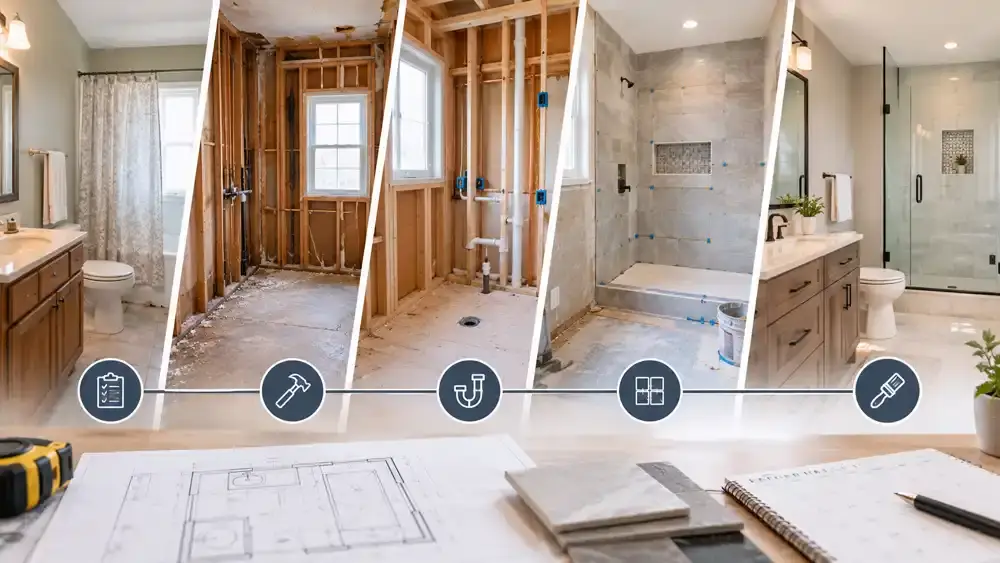
A typical timeline for a full remodel
| Stage | Typical time | What happens |
|---|---|---|
| Planning and design | 2 to 6 weeks | Site visit, measurements, layout, choosing finishes, written estimate |
| Ordering and lead times | 2 to 8 weeks, overlaps planning | Vanity, tile, glass and fixtures are ordered. Custom items take longest. |
| Permits | Varies by town | Needed for many remodels with plumbing or electrical changes |
| Demolition | 1 to 3 days | Old fixtures, tile and walls come out |
| Rough plumbing and electrical | 2 to 4 days | New lines, valves, drains and wiring, followed by inspection |
| Framing, backer board and waterproofing | 3 to 5 days | Walls and floor prepared. Waterproofing needs time to cure. |
| Tile and flooring | 3 to 7 days | Setting, grouting and sealing. Patterns and large tile take longer. |
| Fixtures, vanity, glass and finishes | 2 to 5 days | Plumbing trim, lighting, mirrors, accessories. Custom glass is measured after tile. |
| Punch list and cleanup | 1 to 3 days | Final touch-ups and walkthrough |
Notice how much of the clock is spent before a single hammer swings. Design choices and orders drive the schedule more than the building does.
Timelines by project type
Not every bathroom project is the same size. Here is how the scope changes the clock.
- Cosmetic refresh. New paint, vanity, faucet, lighting and hardware. Often a week or two once materials arrive. No walls or plumbing move.
- Tub-to-shower swap. New base, wall surround or tile, and valve work. Usually one to three weeks, depending on tile and waterproofing.
- Full remodel, same layout. New tile, vanity, shower, toilet, flooring and finishes with fixtures in the same spots. Commonly several weeks of construction.
- Full remodel with layout changes. Moving the toilet, shower or vanity means new plumbing, framing and floor work. Add time for permits and inspections.
- Primary suite with a soaking or jetted tub. More electrical, floor support and finish steps. Plan for the longest timeline of the group.
A decision calendar that keeps the job moving
Most delays come from slow decisions, not slow crews. A simple calendar helps you stay ahead.
- Weeks 1 to 2: Pick your layout and your must-haves. Confirm the budget.
- Weeks 2 to 4: Choose tile, vanity, fixtures and glass. Approve the written scope and estimate.
- Weeks 3 to 6: Orders go in. Permits are filed. Confirm delivery dates in writing.
- Before demolition: Check that every major item has arrived or has a firm date. Walk the site with your contractor.
- During construction: Be available for quick answers. Approve changes in writing, and ask what each change does to the schedule.
- At the end: Walk the finished room, make a punch list, and confirm the cleanup.
If you are early in the process and still deciding how far to go, our guide on {A(G(“adding-a-bathroom-to-a-basement”),”adding a bathroom to a basement”)} shows how planning works when plumbing is a big factor. And if you are choosing finishes, remember that waterproof, easy-clean materials save time on upkeep after the job is done.
What makes a remodel take longer
- Custom or backordered items. A custom vanity or frameless glass can take weeks. Order early.
- Hidden damage. Once walls open, we sometimes find rot, old leaks or outdated pipes. If you suspect a leak, our guide to a shower leaking through the ceiling explains the signs.
- Layout changes. Moving a toilet or shower means new plumbing and often floor work.
- Changes mid-project. Switching tile or fixtures after work starts can mean reorders and rescheduling.
- Permits and inspections. Each inspection can pause the job until it passes.
- Waterproofing and cure times. Some membranes and thinsets need set times before the next step. Rushing them risks leaks later.
- Special features. A jetted tub, heated floors or a custom tile pattern add steps.
What makes it faster
- Make your design decisions before demolition starts.
- Order everything in advance and confirm delivery dates.
- Keep the layout the same if speed matters most.
- Choose standard sizes and in-stock materials.
- Pick one point person to answer questions fast.
- Stay flexible about the start date, since a good crew is often booked.
Living without your bathroom
Plan ahead for the weeks of construction. If you have a second bathroom, you are set. If not, ask your contractor about a temporary plan. Options include a nearby bathroom, a portable setup, or sequencing work so the toilet is back in service quickly. A basement bathroom can also be a lifesaver. If you have been thinking about one, read our guide to adding a bathroom to a basement.
Ask for a schedule up front
A good contractor gives you a written timeline, with start and finish estimates, and tells you what could change it. They also explain how they handle surprises. That is how we work. When you get a quote for a bathroom remodel, ask three things. When do materials need to be ordered? Who pulls the permits? What happens if we find hidden damage?
When the work is done, keep it looking new. Fresh caulk matters most. See how in our guide to caulking a bathtub.
Common mistakes to avoid
- Ordering materials after demolition starts
- Changing the design mid-project
- Booking a remodel right before a holiday, a big event or a house sale
- Not asking who handles permits
- Assuming the old plumbing is fine without checking
- Picking the lowest bid with no written schedule
- Skipping the punch list walkthrough
Troubleshooting
- Materials delayed: ask for substitutes or reorder the work sequence so other stages continue.
- Inspection failed: fix the issue and rebook. Ask how long your town takes to reinspect.
- Hidden rot found: agree on the repair and cost before work continues.
- Tile pattern taking longer: confirm the added days before you commit.
- Contractor schedule slips: ask for an updated written timeline.
When to call a professional
A full bathroom remodel involves plumbing, electrical, waterproofing and tile. It is best done by a licensed, insured contractor who gives you a written scope and timeline. Our bathroom remodeling team shares a schedule up front and keeps you updated as the job moves along. Ask for a free estimate to get a timeline for your bathroom.
Delaware considerations
Coastal Delaware is busy in summer, and many homeowners want work finished before the season. Good crews book up, so reach out early. Second-home owners can lose time when decisions need to be made from afar. Plan a site visit, agree on choices ahead and let your contractor handle ordering. Permit timelines and inspection schedules vary by town and county, so ask your contractor for a realistic window. Delivery of special-order items can also be slower in peak season.
Frequently asked questions
How long does a full bathroom remodel take?
Construction often runs several weeks for a full remodel, with planning and ordering adding a month or more in front. Layout changes and custom items stretch it.
How long does a small bathroom remodel take?
A simple update can take one to two weeks. A full gut of a small bathroom still takes several weeks because of waterproofing, tile and inspections.
What delays a bathroom remodel the most?
Backordered or custom materials, hidden damage found after demolition, design changes mid-project and permit or inspection waits.
How long will I be without a bathroom?
For a full remodel, plan on a few weeks. Ask your contractor to sequence the work and set up a temporary plan if you have only one bathroom.
Can I speed up my remodel?
Yes. Decide on finishes early, order materials before demolition, keep the layout the same and choose in-stock products.
When should I start planning a bathroom remodel?
Start two to three months before you want it finished. For summer completion on the Delaware coast, start in winter or early spring.