

Quick summary
Soft, spongy deck boards are a warning. Learn how to test for rot, replace damaged boards, check the frame underneath, and know when a deck is past repair.
- Difficulty
- Intermediate
- Time
- Half a day for a few boards, a weekend for a larger section
- Material cost
- $60 to $400 depending on the number of boards and the material
- Read time
- 7 min
Rough retail range for decking and fasteners only. Joist repair, railing work and a full resurface cost more. Coastal and composite materials can raise the price.
You step on a deck board and it gives. Or you see dark, crumbly wood along the edge. A soft deck board is easy to ignore. Do not. Rot spreads, and the board you see may be the least of it.
Replacing a few bad boards is a reasonable DIY job. But the real question is what is under them. This guide shows how to test, replace and prevent rot, and how to tell when the frame has gone too far.
Start with the screwdriver test
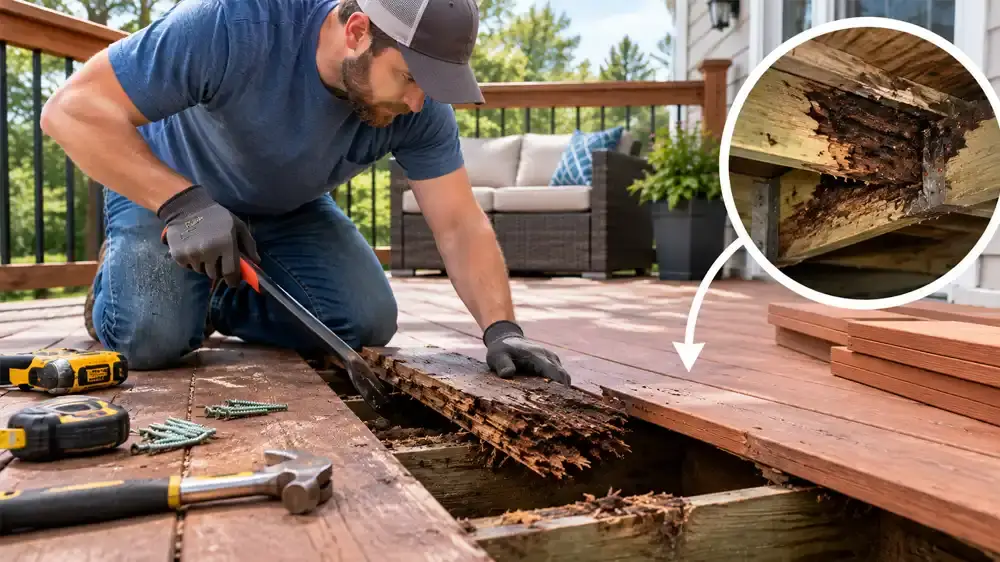
Take a flat screwdriver and push it into the board. Sound wood resists. Rotted wood lets the tip sink in easily, and chunks come away soft and stringy. Test the boards near the house, around posts, at end cuts and wherever water pools. Then crawl under, if you can, and test the joists, ledger board and posts the same way.
Make a list. Mark bad boards with chalk. Count them. A handful of bad boards is a repair. Boards that are rotted across a wide area, or rot in the framing, tells a different story.
Why decks rot
Wood stays healthy when it dries quickly. Decks fail when water gets trapped. Gaps clog with debris. Boards sit tight against a wall. The ends of boards soak up water. The tops of joists hold moisture under the boards. Fasteners rust and stain the wood. Every year the damage grows.
Climate matters. Humid summers and coastal salt air keep wood wet longer, so decks near the beaches age faster. Sun, rain and storms do the rest.
Replace boards the right way
Take out the bad board and see what is under it. Screws are easier to remove than nails and do not damage nearby boards. Check the joist underneath with your screwdriver. If it is solid, cut a replacement board to length, leave a gap of about 1/8 inch to 1/4 inch between boards for drainage, and fasten it with corrosion-resistant screws. Seal the cut ends. They absorb water first.
Match your material. Pressure-treated pine is common. Cedar looks nicer but costs more. Composite resists rot but needs matching profiles and the right clips. If many boards are bad, it may make sense to resurface the whole deck.
When the frame is the problem
This is the dangerous part. A rotten ledger board, which connects the deck to the house, or rotted posts can lead to collapse. If your screwdriver sinks into a joist, if posts are soft at the base, if the deck sways, or if railings wobble, stop. Do not stand a crowd on it. Get it inspected.
A deck built right lasts a long time. If yours has failed early, the framing, flashing or footing may have been done poorly. See what a solid build looks like in our custom deck work. If you are planning to make the deck bigger, add stairs, or tie it to a new room, look into home additions. And if you want to cover part of it as a porch or sunroom, a pro can plan the framing as one project.
A deck repair is also a good moment to check the rest of the house. Our guide to a basement that leaks after rain covers drainage, which affects decks too.
Symptoms and warning signs
- Soft, spongy or crumbly boards
- Dark stains, mushrooms or green fuzz on wood
- Boards that crack or splinter easily
- Loose or wobbly railings and stairs
- A deck that bounces, sags or feels unsteady
- Rusted, loose or popped-up fasteners
- Gaps or separation between the deck and the house
Common causes
- Water trapped between boards and framing
- Debris packed in gaps between boards
- Boards installed with no gap for drainage
- Missing or failed flashing at the house
- Posts or joists in contact with soil or standing water
- Old fasteners that rusted and stained the wood
- Lack of sealing or maintenance
How to diagnose the problem
- Probe boards, joists, ledger and posts with a screwdriver
- Look under the deck for dark, damp or crumbling wood
- Check the ledger board flashing where the deck meets the house
- Check post bases and footings for rot or movement
- Push on the railings. They should not move
- Look for sagging boards or an uneven surface
- Note any nails or screws that are rusted through
Tools and materials
Tools
- Flat screwdriver
- Circular saw or hand saw
- Drill and driver
- Pry bar and hammer
- Tape measure and speed square
- Safety glasses and gloves
- Flashlight
- Wire brush
Materials
- Replacement decking boards in the matching material
- Corrosion-resistant deck screws
- Wood end-cut sealer
- Joist tape for the top of framing
- Stain or sealer
- Replacement joist or post lumber if needed
Safety first
- Do not use a deck with rotted framing, posts or ledger.
- Wear safety glasses, gloves and a dust mask when cutting treated wood.
- Keep people off the deck if railings or stairs are loose.
- Check for hidden wiring or plumbing before drilling.
- Work with a helper when replacing long boards or stair treads.
Step-by-step repair
- Clear the deck and sweep out the gaps.
- Probe every board and mark the bad ones.
- Remove the bad boards by backing out the screws or prying them up.
- Probe the joists beneath. If solid, clean them and apply joist tape.
- Cut new boards to length. Seal the cut ends.
- Position each board with a 1/8 to 1/4 inch gap for drainage.
- Fasten with corrosion-resistant deck screws, two per joist.
- Check railings and stairs for movement and tighten or fix them.
- Apply stain or sealer once the wood is dry and ready.
- Clean the deck and gaps each season to prevent a repeat.
Common mistakes to avoid
- Replacing boards without checking the joists
- Using indoor screws or nails that rust
- Laying boards tight against each other with no gaps
- Skipping end-cut sealer
- Ignoring wobbly railings
- Treating the surface and leaving a rotted frame
Troubleshooting
- New boards cup or warp: they were not dry or sealed. Use acclimated, quality boards.
- Screws keep popping up: the wood is moving or the screws are the wrong type.
- Rot comes back in the same place: water is pooling. Fix drainage and flashing.
- Deck feels bouncy after repairs: joists may be undersized or damaged. Have it checked.
- Stains bleed from fasteners: replace them with coated or stainless screws.
Repair or replace?
Replace individual boards if the damage is local and the joists are solid. Resurface the whole deck if the boards are worn out but the frame is sound. Rebuild when the ledger, joists or posts are rotted, when the footings are failing, or when repairs would cost most of the price of a new deck.
When to call a professional
Call a pro if your screwdriver sinks into joists, posts or the ledger, if the deck sways or pulls from the house, or if stairs and railings are unsafe. Decks fail suddenly, and falls are serious. Our deck builders inspect the frame, repair or rebuild it to code and finish with materials suited to the coast.
Delaware considerations
Southern Delaware's humidity and salt air are hard on wood and metal. Use stainless or coated fasteners and hardware rated for coastal use. Hurricane season and nor'easters add wind and water loads, so railings and connections matter. Many towns and Sussex County require permits for new decks and major repairs, especially for ledgers, stairs and railings. Check with your local office before starting.
Frequently asked questions
How do I know if my deck boards are rotted?
Push a screwdriver into them. If it sinks in easily or the wood crumbles, the board is rotted. Check joists, posts and the ledger too.
Can I replace just a few deck boards?
Yes, if the framing under them is solid and the new boards match. Use the right fasteners and leave gaps for drainage.
How long do deck boards last?
It depends on the material, the climate and care. Wood decks often need board replacement before the frame does, especially in humid coastal areas.
Is a deck with soft spots safe to use?
A few soft boards may only need replacing, but soft framing, posts or ledger can collapse. Stay off the deck until it is checked.
Do I need a permit to repair a deck in Delaware?
Replacing a few boards usually does not, but structural repairs and rebuilds often do. Rules vary by town and county, so call your local building office.
Is it better to repair or rebuild an old deck?
Repair if the frame is sound. Rebuild if the frame is rotted or the cost of repairs is close to a new deck.