

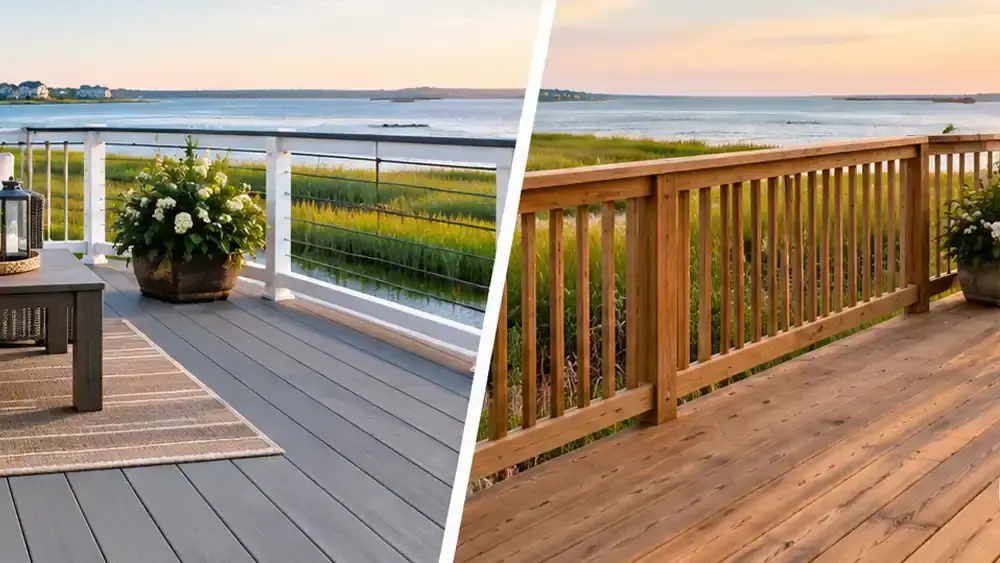
Quick summary
Wood costs less up front. Composite costs less to maintain. This guide compares both on price, upkeep, heat, lifespan and looks, with notes for humid, salty coastal weather.
- Difficulty
- Pro recommended
- Time
- Decision in a weekend. Build time depends on deck size and design.
- Read time
- 8 min
Wood is usually cheaper to buy. Composite and PVC usually cost more up front and less to maintain. Framing, railings, stairs, permits and labor often add more than the boards. Ask for line-item pricing so you can compare materials fairly.
You are planning a new deck, or replacing a tired one. Sooner or later you face the same question. Wood or composite?
There is no single right answer. Each has real strengths and real downsides. The best choice depends on your budget, how much upkeep you will do, and the weather your deck faces. Here is a plain comparison, with extra notes for coastal Delaware.
The quick comparison
| Factor | Pressure-treated wood | Cedar or hardwood | Composite |
|---|---|---|---|
| Upfront cost | Lowest | Medium to high | Higher |
| Upkeep | Seal or stain regularly | Seal or stain regularly | Wash, occasional cleaning |
| Rot and insect resistance | Treated, but can still rot | Naturally resistant, varies | Resists rot and insects |
| Splinters | Yes, over time | Yes, some | Rare |
| Heat in direct sun | Moderate | Moderate | Can run hot, especially dark colors |
| Look | Natural, needs care | Rich natural grain | Consistent, many colors |
| Typical lifespan | Shorter without care | Longer with care | Often longest, varies by brand |
Lifespans depend on the product, the install and how the deck is used. Always read the manufacturer’s warranty and what it excludes.
Pressure-treated wood
This is the budget favorite. It is widely available and easy to work with. The chemicals in it slow rot and bugs. But it is not maintenance free. It cracks, warps and grays in the sun. Most pros suggest cleaning and sealing or staining it every year or two. Skip that, and it ages quickly in damp climates.
Cedar and other natural woods
Cedar and tropical hardwoods look great. Many have natural oils that resist rot. They also cost more, and they still need sealing to hold their color. If you love the look of real wood and enjoy a bit of upkeep, they are worth a look.
Composite decking
Composite boards blend wood fibers and plastic. Better products wear a protective cap layer. They do not need staining. They resist rot and most insects. They are comfortable on bare feet and do not splinter.
But there are tradeoffs. The upfront price is higher. Dark boards can get hot in full sun. Cheaper or older products can fade, stain or grow surface mold, especially in shade and damp air. You still need to clean them. Not all composite is equal, so ask about the cap, the warranty and the install requirements.
What coastal Delaware does to a deck
Our weather is hard on outdoor materials. Humidity keeps wood damp. Salt air eats at metal. Sun and storms add wear. Here is what that means in practice.
- Wood needs consistent care. Neglected wood decks near the coast go downhill fast. See our guide on how to repair rotted deck boards if you are already there.
- Composite handles moisture well. But it does not fix a bad frame. Poor flashing or rotted joists will still fail.
- Fasteners matter. Use stainless or coated hardware rated for coastal use, no matter which board you choose.
- Shade and mold. In damp, shady spots, even composite can grow surface mold. Clean it with a mild soap and a soft brush.
- Wind and storms. Railings, stairs and connections should be built to code, with strong attachment to the house.
Installation differences that affect the build
The material you pick changes how the deck is built, not just how it looks.
- Joist spacing. Many composite makers require joists closer together than wood decking does, often 16 inches on center, and closer for diagonal patterns. Check the installation guide for your product.
- Fasteners. Wood boards are usually face-screwed. Composite can use hidden clips or special screws. Hidden fasteners give a cleaner surface, and they also leave gaps for drainage.
- Gaps and expansion. Composite expands and contracts with temperature. Spacing at ends and sides must follow the maker’s rules.
- Ventilation under the deck. Airflow keeps boards and framing dry. Low, closed-in decks need extra attention.
- Warranty conditions. Many warranties require proper spacing, fasteners and installation. A poor install can void the coverage.
Comfort, safety and everyday use
Think about how your family uses the deck. Kids and pets run across it barefoot. Wood can splinter as it ages, and composite rarely does. Wet boards can be slippery in either material, so look at the surface texture and ask about slip resistance. Grills, fire pits and furniture can scratch or stain some boards, so check the maker’s rules for heat sources. If your deck gets hours of afternoon sun, test a sample in the light before you buy.
Consider the railings and stairs too. They are a big part of the look and the cost, and they are the parts people lean on and lean over. They should be built and attached to code, whichever board you choose.
Resale and curb appeal
A tidy, solid deck helps your home show well. A gray, splintering one does the opposite. Neither material guarantees a price boost, and the effect depends on your market and the rest of the house. But if you plan to sell in the next few years, a clean, well-built deck is one of the easier outdoor wins. Our guide on {A(“https://delawarehomes302.com/finished-basements/”,”finished basements”)} is a good next read if you are weighing other spaces to add value.
Think total cost, not just price per board
A wood deck costs less today. But add up years of sealing, staining and board replacement, and the gap narrows. A composite deck costs more now and less to keep up. If you plan to stay in the home for a long time, composite often pays back in time and effort. If you plan to sell soon, or want the lowest upfront price, wood can make sense.
Do not forget the frame. The boards are the part you see, but the framing is what keeps people safe. Whatever surface you pick, the structure should be built to last. Our custom deck work starts with the frame, flashing and footings, and then adds the surface you choose.
How to decide
- Set your budget. Include framing, railings, stairs and permits.
- Be honest about upkeep. Will you seal a deck every year? If not, lean composite.
- Think about sun. A south-facing deck with bare feet may call for lighter composite colors or wood.
- Consider the look. Walk through a showroom and see boards in person.
- Check the warranty. Read it, and ask what voids it.
Planning to cover part of the deck with a roof or a screened porch? Talk to us about additions and bonus rooms. A single plan keeps the frame, roofline and materials working together.
Common mistakes to avoid
- Choosing only by price per board
- Ignoring the frame, flashing and footings
- Using regular screws instead of coastal-rated fasteners
- Buying composite without reading the warranty and install rules
- Picking dark composite for a full-sun deck without testing the heat
- Skipping sealing on a wood deck and expecting it to last
- Not allowing gaps for drainage and expansion
- Forgetting permits for a new deck or major repair
Troubleshooting
- Composite looks stained: clean it with mild soap and a soft brush. Follow the maker's cleaning advice.
- Wood deck is graying and rough: clean, sand lightly and apply a quality sealer.
- Mold on shaded composite: improve airflow and clean regularly.
- Composite is too hot: choose lighter colors or add shade.
- Boards are cupping: check drainage and board spacing.
When to call a professional
A deck is a structural project, and the material is only part of it. Footings, ledger connections, flashing, railings and stairs all affect safety. Our deck builders can walk you through wood and composite options, show samples, and build the deck to last in coastal weather. Ask for a free estimate.
Delaware considerations
Southern Delaware's humidity and salt air make material choice and hardware choice matter more. Use coastal-rated fasteners and hardware. Check local rules, since many towns and Sussex County require permits for new decks, and some homeowners associations have rules about materials and colors. Hurricane season and nor'easters put extra stress on railings and connections, so build and maintain them well.
Frequently asked questions
Is composite decking better than wood?
It depends on your priorities. Composite costs more up front but needs less upkeep and resists rot. Wood costs less but needs regular sealing.
Is composite decking worth the extra cost?
For many homeowners who plan to stay and want low maintenance, yes. If you want the lowest upfront price or plan to sell soon, wood may be the better fit.
Does composite decking get hot?
It can, especially dark colors in direct sun. Lighter colors and shade help.
How long does a wood deck last compared with composite?
It varies a lot with the product and care. Wood can last many years with good maintenance, and composite often lasts longer with less work.
What is best for a deck near the coast?
Either can work if the deck is built well. Use coastal-rated fasteners, plan for moisture and salt, and maintain whichever material you choose.
Does composite decking need to be cleaned?
Yes, but it is usually simple. A mild soap and soft brush a couple of times a year keeps it looking good.