

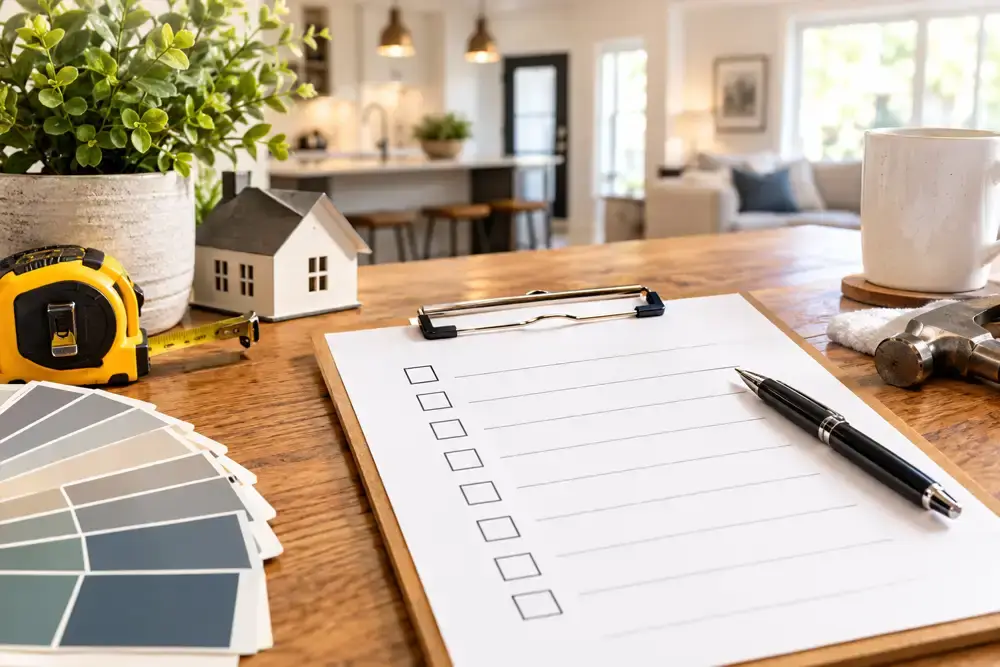
Homes do not fail all at once. They wear out one small piece at a time. This checklist helps you catch problems early, plan upgrades before they turn into emergencies, and spread costs over the year. Tick items off as you go. Your progress saves on this device. We also share how long common parts last and what to watch for in a humid, storm-prone coastal climate.
What’s in this article
Why a checklist beats guessing
Most big repair bills start as small, ignored signs. A soft spot in a deck board. A little gap in bathroom caulk. A damp corner in the basement.
A checklist keeps those signs in front of you. It also helps you update on your own schedule, not the house’s. That is cheaper and far less stressful.
It is October, so this is a great time to start. Fall checks protect your home before winter. Then you can plan bigger projects for spring.
The interactive checklist
Tap each box as you finish a task.
Fall
Winter
Spring
Summer
Every year or two
Take a photo of anything you are unsure about. Dated photos make it easy to see if a stain or crack is growing.
How long things usually last
These ranges are general guides. Weather, quality, and care change them a lot.
| Part of the home | Typical life | Watch for |
|---|---|---|
| Asphalt shingle roof | 20 to 30 years | Curling, granule loss, leaks |
| Tank water heater | 8 to 12 years | Rust, noise, puddles |
| Heating and cooling system | 15 to 20 years | Rising bills, uneven rooms |
| Windows | 15 to 25 years | Fogging, drafts, stuck sashes |
| Wood deck | 15 to 25 years with care | Soft boards, loose railings |
| Bathroom caulk | Check yearly, redo as needed | Gaps, mold, peeling |
| Bathroom fixtures and finishes | 15 to 20 years | Cracks, stains, outdated layout |
Coastal Delaware extras
Living near the beaches adds a few jobs you will not find on generic lists.
- Humidity. Damp air feeds mold in basements and baths. Keep air moving and fix leaks fast.
- Salt air. It speeds up rust on railings, screws, and outdoor fixtures. Use rated hardware.
- Storms. Nor’easters and hurricane season can loosen siding, shingles, and decks.
- Seasonal homes. If you are away for months, ask a neighbor or a property manager to check for leaks.
A dry basement is the base of a healthy home. If yours stays damp or just feels wasted, a well-planned basement finishing project can turn it into usable space, once moisture is under control.
Repair or update?
Not sure whether to patch it or replace it? Use these quick signs.
Repair when
- The problem is small and local
- The part is less than halfway through its life
- The fix costs far less than a replacement
Update when
- You keep paying for repeat fixes
- Parts are hard to find
- The room no longer fits how you live
A tired bathroom is a classic case. If the tile is cracked, the tub is stained, and the layout is cramped, patches will not help. A full bathroom remodel usually makes more sense. If you want a bit more luxury, read about a jacuzzi tub bathroom remodel.
An aging deck is another one. A few loose boards are a repair. Soft framing is a rebuild. See our custom deck work for options. And if you simply need more room, an addition or bonus room can be smarter than moving.
Some checklist items are fine to handle yourself. For the rest, our guide on DIY versus hiring a pro helps you decide.
How to budget
- Set aside money monthly. Many homeowners plan 1 to 2 percent of their home’s value per year. Older and coastal homes may need more.
- Rank by risk. Water, roof, electrical, and safety come first.
- Batch projects. Doing a bathroom and a basement together can save on setup and mobilization.
- Get quotes in winter. Contractors have more room in the schedule, and you can lock in a spring slot.
Thinking about selling in a year or two? Pair this list with our guide on how to increase home value before selling.
Found something on your list that needs a pro?
We serve Lewes, Milton, Millsboro, and all of Southeast Delaware. Send us your list and we will help you prioritize.
Request a Free EstimateFrequently asked questions
How often should I update my home?
Do small checks every season and a bigger review once a year. Review major parts like the roof, windows, and HVAC every few years based on age and condition.
What should I update first in an older home?
Start with anything that affects safety or water: roof, gutters, electrical, plumbing leaks, and basement moisture. Cosmetic updates come after.
How much should I budget for home upkeep each year?
A common rule of thumb is 1 to 2 percent of your home’s value per year. Older and coastal homes often need more.
When is the best time of year for exterior projects in Delaware?
Spring and early fall. Temperatures are mild and crews can plan around weather. Book early because good contractors fill up.
Do home updates help with insurance?
Some insurers look at the age and condition of your roof, wiring, and plumbing. Ask your agent which updates may matter for your policy.